
The latest monthly report by the International Air Transport Association (IATA) confirms that global air cargo will conclude in 2025 with a “4% increase in chargeable weight and a -4% decline in average freight rates,” marking the first time since 2020 that there has been a divergence between increased volume and decreased prices. In 2026, the consensus growth rate will slow to 2-3%, the second-lowest rate in nearly a decade. Faced with six headwinds, including the disappearance of “taxation benefits” for cross-border e-commerce, new tariffs in Europe and the United States, the concentrated delivery of wide-body aircraft belly cargo, and a rebound in the punctuality rate of sea freight, how should shippers prepare in advance? This article uses first-hand data and scenario-based science popularization to break down the three stages of booking, compliance, and cost reduction under the “deceleration cycle” of air freight in 2026.
-----

Airline freight rates are not charged based on either “gross weight” or “volume” alone, but rather on the higher of the two. Volume weight (kg) = Length × Width × Height (cm) ÷ 6000. In 2025, the average “bulk ratio” for e-commerce packages was as high as 1:3, indicating that 1 kilogram of actual gross weight might correspond to 3 kilograms of volume weight, directly driving up the shipping costs per shipment.
2. Priority loading (front-loading)
In May, the United States announced the elimination of the $800 small-quantity tax exemption. A “rush to ship” occurred in March and April. The spot freight rate from Pudong to Los Angeles surged to 7.8 USD/kg, more than double the rate for the same period in 2024.
3. Passive Capacity
The recovery of international passenger flights has led to an increase in belly cargo capacity, which was 18% higher year-over-year. However, demand increased by only 4%, resulting in an excess of “passive capacity,” which was the primary cause of the gradual decline in freight rates during the latter half of the year.
4. Structured Bubble Cargo.
Semiconductor wafers, server cooling modules, and other AI-related equipment, which have high unit values and stringent time requirements, are often “light but bulky.” In 2025, these goods accounted for 8% of the billing weight but generated 19% of the revenue, earning them the moniker of “white-glove cabin classes” by airlines.
---
The United States will eliminate the $800 tax exemption in May 2025. From October to November 2025, e-commerce parcel shipments from China to the US declined by 51%. The European Union will impose a €3 administrative fee per package for shipments under €150 starting in July 2026, and will require mandatory IOSS (Import One-Stop Shop) declarations. This is expected to further reduce air freight demand by another 20%.
② Macro-level trade with “low Beta”
The IMF predicts that global trade volume growth will reach only 0.5% in 2026, which is lower than the 3.1% growth rate of GDP. The “elasticity coefficient” for air transport and trade, which historically ranges from 1.2 to 1.5, has exhibited an unusual inversion in this case.
③ Wide-body aircraft deliver ‘peak capacity’
In 2026, Airbus A350F and Boeing 777-8F deliveries totaled 42 aircraft, combined with the recovery of 380 freighter seats in passenger aircraft, resulting in an estimated +6% increase in global available ton-kilometers (ATK), while demand ton-kilometers (RTK) increased by only +2.4%, creating the largest supply-demand gap since 2012.
④ The punctuality rate for maritime shipping has seen a resurgence.
According to data from the Shanghai Maritime Exchange, the on-time rate for the Asia-Europe shipping route had risen to 68% by December 2025, an improvement of 30 percentage points from the low point in 2022. Some 3C general cargo has begun to flow back into maritime transport, while air transport has seen a diversion of approximately 2-3% of its volume.
⑤ “Invisible markups” for compliance costs.
The second phase of the EU’s ICS2 (Import Control System 2) will be launched in December 2025. It requires all express shipments and packages to complete the ENS (Entry Summary Declaration) declaration 4 hours prior to loading. The additional cost per shipment is 6 to 8 euros. The US CBP also plans to advance the ACAS (Air Cargo Advance Screening) process to “booking time,” with penalties for non-compliance up to USD 500,000.
⑥ Macroeconomic “decline in consumer spending.”
Although global inflation has declined to 3.2%, it continues to erode disposable income. The share of non-essential consumer goods has decreased by 1.8 percentage points, directly weakening the foundation of e-commerce air freight.
---

1. BSA(Block Space Agreement)——“Quantity-based pricing, not price-based.”
Lock in a fixed cabin position with the airline one year in advance. If the cargo pickup volume falls below the agreed level, compensation must be paid in accordance with the “empty cargo fee” (Dead Freight); if it exceeds the level, it can trigger the “overage rate” charge. It is suggested to switch to a hybrid model of F+B (Flex + Block) in 2026: 70% fixed cabins + 30% flexible cabins, which can both prevent cabin explosions and avoid penalties for empty cabins.
2. FAK(Freight All Kinds)——“One price.”
The airlines have established a uniform quote for general standard cargo, without further categorizing by item name. The spot price for Pudong–Frankfurt FAK in Q4 2025 is USD 2.45/kg, a 18% decrease from 2024. However, there will be an oversupply of capacity in 2026, leaving room for FAK prices to drop by 5–8%. This makes it suitable for non-urgent, non-high-value cargo.
3. GCR(General Cargo Rate) vs. SCR(Specific Commodity Rate)
GCR represents the “reference price” for air freight rates, while SCR represents the discounted price offered by airlines for specific item names (such as 0300 Live Goods, 2199 Textiles, 7480 Computer Components). Typically, SCR is 10–30% lower than GCR. For AI servers in 2026, the 7480 category SCR applies. It is recommended to apply for the “annual tiered pricing” in advance, as the discounts become deeper as the quantity increases.
4. IATA Temperature Code
Biomedical products, vaccines, and stem cells require the use of “temperature-controlled containers” (RKN or RAP). Airlines operate according to the IATA PCR (Perishable Cargo Regulations). The temperature range is divided into the following categories:
CRT(Controlled Room Temperature)15~25 ℃
COL(Cold)2~8 ℃
FRO(Frozen)-20 ℃
It is projected that the global growth rate for cold chain air freight will remain at 8% in 2026, outpacing general cargo significantly. Securing RKN container capacity in advance can result in a premium of 15–20%.
5. One Bill of Lading
Once the air transport segment’s build-up process is completed, the system automatically generates a multimodal transport bill of lading, allowing seamless connections to the China-Europe Railway Express or truck flights downstream, thereby avoiding the need for repeated customs declarations. In 2025, Sunny Woldewide (SZ) Logistics conducted a trial on the “Shenzhen-Liège-Duisburg” route, which showed that the average cost was 18% lower compared to pure air transport, while the delivery time only increased by 1.5 days.
---
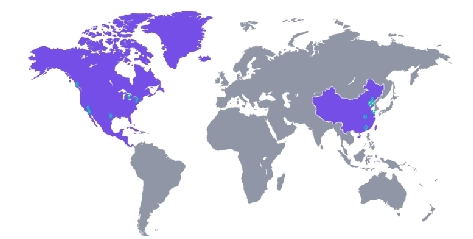 |
Southeast Asia: RCEP tariff reductions have led to a surge in the “front showroom, back warehouse” model for e-commerce fulfillment centers in Vietnam, Thailand, and Malaysia. Air freight is projected to grow by 5-6%, more than double the global average. South Asia: India’s shift in mobile phone and automotive component manufacturing capacity. The demand for Mumbai-to-Shenzhen reverse cargo (mobile phone back panels, camera module assemblies) has surged, potentially increasing return cargo loading rates by 12%. Middle East, North Africa: Dubai and Riyadh overseas warehouses offer integrated “free trade zone + distribution” services. The growth rate of transit e-commerce packages has increased by 15%, making them a key hub for air transit between “China, the Middle East, and Africa”. North America: The savings rate among US residents has dropped to 3.2%. Weak consumer spending combined with excess capacity has led to expectations that freight rates will continue to decline by 6-8% by 2026. This is suitable for “fast fashion” customers with low inventory and high turnover. Europe: ICS2 regulations + €3 administrative fee per item, clearance processing time increased by 0.8 days. It is recommended to use the “Bonded e-Hub” in advance and utilize the T1 (Temporary Storage) mode. Ship the cargo to the bonded warehouse first, and then clear customs after the buyer places an order. This saves 0.5 days of port congestion time. |
1. Complete the BSA/F+B negotiations with key airlines by January 15, securing 70% of annual seat capacity.
2. Re-categorize the product names by January 31 and apply for the SCR tiered pricing system, which is expected to result in savings of 8-12% on shipping costs.
3. Complete the registration of an EU IOSS number by February 15 to avoid an administrative fee of €3 per item.
4. Identify and set up 2 “tax-free e-Hubs” in Southeast Asia and the Middle East by February 28 to facilitate early warehousing.
5. Sign the “Multimodal Transport Guarantee Clause” with the logistics provider by March 15. This clause will automatically switch to air freight or rail transport when the air cargo capacity is exceeded, ensuring timely delivery.
---
|
The slowdown in growth does not signify the disappearance of opportunities, but rather a contest between “who is more stable, who is faster, and who is more efficient.” Sunny Worldwide (SZ) Logistics Co., Ltd. – a licensed non-vessel operating common carrier (NV007258) approved by the Ministry of Transport, and a senior member of the WCA (87909). With 20 years of experience in air freight operations, the company has established fixed panel and cabin resources at Shenzhen/Guangzhou/Hong Kong’s three major airports. It maintains stable capacity for routes to Europe, the Middle East, Southeast Asia, and Africa throughout the year. In the peak period of e-commerce cargo in Q4 2025, the company maintained a 98% on-time shipment rate. What we do for you goes beyond simply “flying fast”: Accelerated compliance: The US has eliminated its $800 tax-free threshold, while the EU has introduced a new tariff of €3 per item. We have developed a complementary “pre-clearance + bonded warehouse” model. Our overseas warehouses in Los Angeles, Amsterdam, and Dubai can complete sorting, labeling, and transportation within 24 hours, thereby reducing the risk of returns by more than 30%. High-value customization: Chips, biopharmaceuticals, and precision instruments with full-process temperature control, shock protection, and AOG emergency channels. Customs clearance can be completed within 6 hours, with door-to-door service within 12 hours. In 2025, this service helped a semiconductor client in southern China to reduce the transportation time of 8 tons of wafers from 72 hours to 38 hours, saving over $1.2 million in customs duties and production line downtime costs. Multi-modal coverage: seamless integration of air, sea, rail, and card transportation with a “single-order system.” When air freight capacity is overwhelmed or prices surge, it automatically switches to the China-Europe Railway Express or fast shipping + air logistics, resulting in an average 15% reduction in overall logistics costs. |
 |
The slowdown in growth does not signify the disappearance of opportunities, but rather a contest between “who is more stable, who is faster, and who is more efficient.” Sunny Worlewide (SZ) Logistics Co., Ltd. – a licensed non-vessel operating common carrier (NV007258) approved by the Ministry of Transport, and a senior member of the WCA (87909). With 20 years of experience in air freight operations, the company has established fixed panel and cabin resources at Shenzhen/Guangzhou/Hong Kong’s three major airports. It maintains stable capacity for routes to Europe, the Middle East, Southeast Asia, and Africa throughout the year. In the peak period of e-commerce cargo in Q4 2025, the company maintained a 98% on-time shipment rate.
What we do for you goes beyond simply “flying fast.”:
In 2026, the slowdown in growth rates does not signify the disappearance of opportunities, but rather a competition between “who is more stable, who is faster, and who is more economical.” Sunny Worliwide (SZ) Logistics takes on the role of being even more customer-focused than the shippers themselves – unless there’s a natural disaster, there are no surprises. Contact us now to obtain your exclusive 2026 air freight fixed-price plan, ensuring that your cargo remains on schedule, safe, and under control even during periods of global adversity!
Feel free to inquire online – we respond within 30 minutes. We offer three logistics options, which can save you more than 5% on your costs.

 français
 Español
 Deutsche
 Italian
 русский
 简体中文
简体中文